HACCP cold chain
Temperature logged end to end.

Charter, ACMI & group flight catering
One caterer across every leg of the itinerary — for charter airlines, ACMI and wet-lease operators, sports teams, tour operators, pilgrim flights and special missions. Provisioned to one standard, on schedule.

Charter flight catering provisions an aircraft that flies no published schedule: the route is built around a customer, it moves late, and it calls at stations that see it once. Counts, formats and timings are fixed for the whole rotation and reissued leg by leg, so leg nine is what left on leg one.
Charter airlines, ACMI and wet-lease carriers, brokers and the tour desks behind a season place the work. Badged vehicles take the uplift airside, and a hi-loader raises it to the door so a full passenger load boards in one movement rather than trickling up the steps.
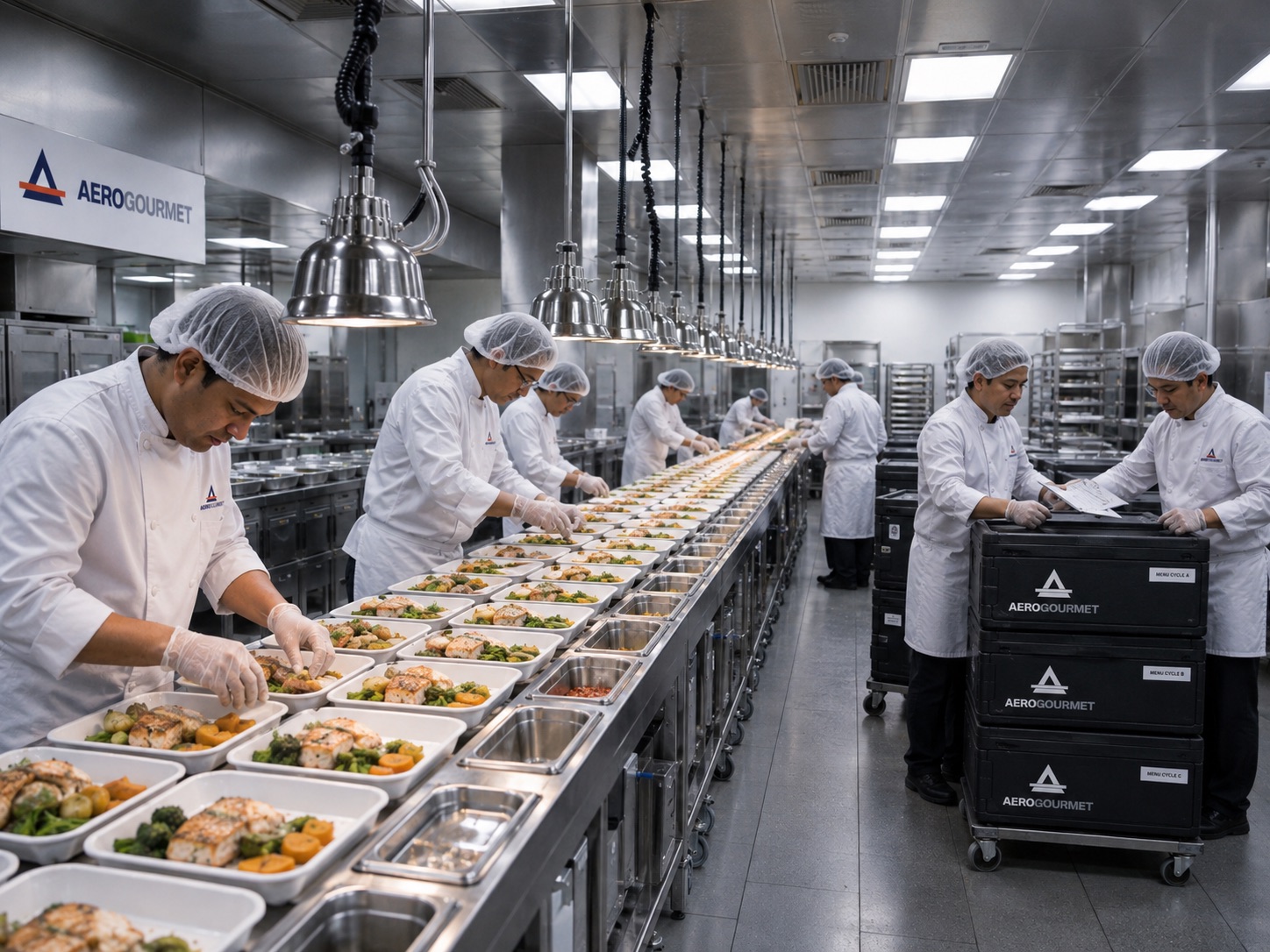
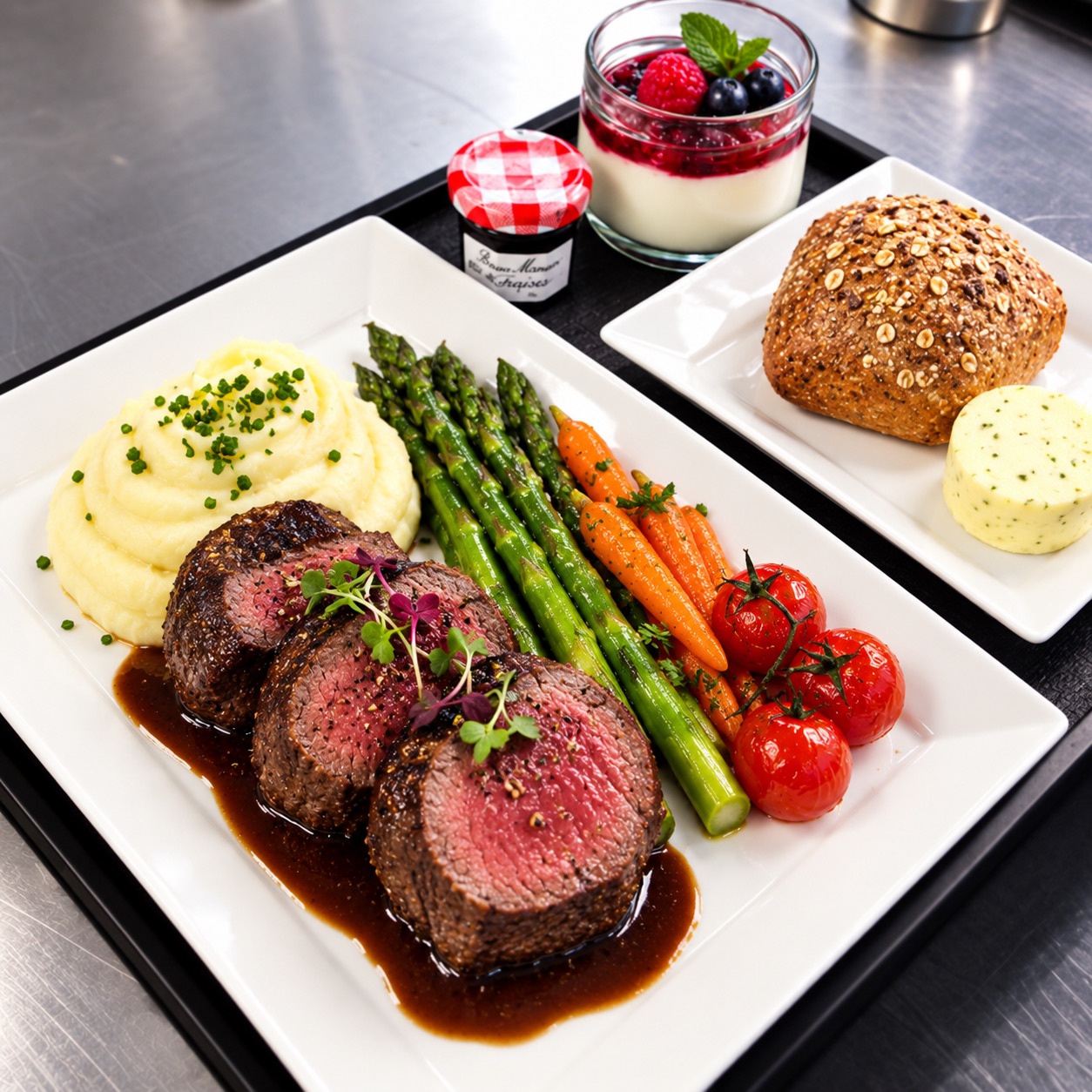
A multi-leg charter is where recycled catering shows. Our chefs build a menu cycle for the whole itinerary — varied enough that nobody eats the same plate twice, specified tightly enough that leg nine matches leg one. The book behind this page carries the charter side of the volume work: a cycle written across the itinerary, tray sets and passenger meal boxes, and a configured VIP cabin on the same uplift as 400 passengers across three cabins.
Every leg
One specification throughout
Same standard
Held at every station
Group volume
Three cabins, full load
before stand
Rotation confirmed
on order
Operator of record
in production
Passenger meal boxes
at handover
Loading sheet per leg
on stand
Boarded at galley height
any time
Late leg absorbed
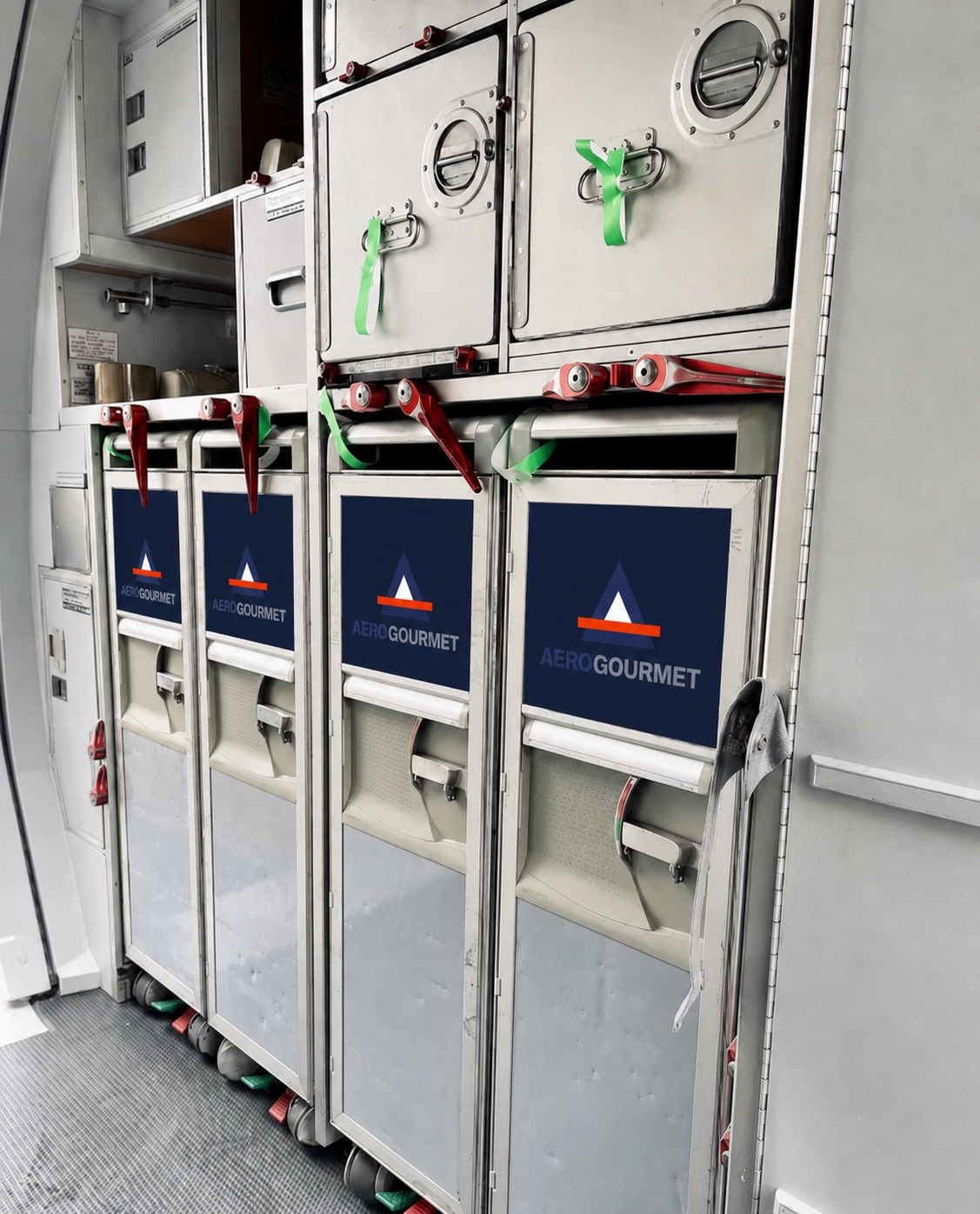
A340, 767, 777 and 787 rotations carrying a full passenger load across three cabins, loaded by hi-loader so the count on the sheet is the count that boards.
Seasonal leisure, sports and pilgrimage legs on narrow-body equipment, provisioned in sealed meal boxes that hold on a tight turnaround and a short galley.
Repatriation, humanitarian and troop movements on whatever airframe is available, provisioned to a format that tolerates a long wait on the ground before departure.
Rotation confirmed: aircraft, legs, passenger load per leg, dietary split.
Menu cycle locked across the itinerary. Station and handler access requested.
Production in an HACCP kitchen. Meal boxes and tray sets counted per leg.
Carts sealed, temperature logged, loading sheet issued per leg.
Airside delivery through the station handler, loader brought up to the door.
Uplift on board, stowed per cabin, loading sheet signed. Next leg already briefed.
| What this operation needs | Typical VIP caterer | Us |
|---|---|---|
| One specification across every leg | Per station | One itinerary |
| Full passenger load per leg | Cabin only | 400+ passengers |
| Late leg added mid-rotation | New supplier | Same contact |
| Central invoicing | Per station | One account |
Proof
You brief the route once. The same coordinator carries it from the first stand to the last, and the specification travels with it — including to the stations served through the group network.
The order follows the operator of record, not the tail number, because the airframe on the certificate can change during a programme without the commercial arrangement changing at all. We hold the specification against that operator, invoice it centrally, and carry it onto whatever aircraft turns up. A mid-season swap changes the loading sheet; it leaves the contract and the menu cycle where they were.
Yes. One coordinator plans and owns every leg — menus, uplift, formats and timings — so the standard holds from the first stand to the last. Legs are briefed as a set rather than sold one at a time, which means a slot that slips on the third leg is reworked against the fourth before it becomes a problem. You brief the route once, and the answer that comes back covers the whole of it rather than the next departure.
Yes. Ramp access and hi-loader boarding let us put a full uplift on board across all three cabins — First, Business and main cabin — on an A340, 767, 777 or 787. The count on the loading sheet is the count that boards, because the carts arrive at galley height rather than being carried up the steps. Cabin splits, dietary sets and crew trays are counted separately and sealed separately, then loaded on the same movement.
The group network does, across 3,000+ airports, and your coordinator stays the single point of contact for all of it. Where a local unit produces the uplift, it produces it to our written brief, and the result is checked against the same allergen and temperature documentation as our own. The station changes; the specification, the packaging and the paperwork do not, and you keep speaking to one person about the whole rotation.
Yes, with formats built for it: sealed meal boxes that survive a long ground wait, counted against the loading sheet, halal under certificate where the rotation requires it. Pilgrimage seasons are planned as capacity before they open, so a late addition draws on a programme already standing rather than on an improvised order. Repatriation and humanitarian movements are treated the same way, with the simplest robust format that still meets the aviation catering standard.
Charter, ACMI & group flight catering
One coordinator prices the whole rotation, leg by leg, and sends the figures back — never a brochure.