HACCP cold chain
Temperature, batch and time logged.

Airline catering — ad hoc, outstation, diversion
Airline catering wherever your flight kitchen isn’t. Ad hoc uplifts, outstation catering, diversions, technical stops and AOG — galley-ready tray sets and meal boxes delivered airside, through one ops desk, at 3,000+ airports.
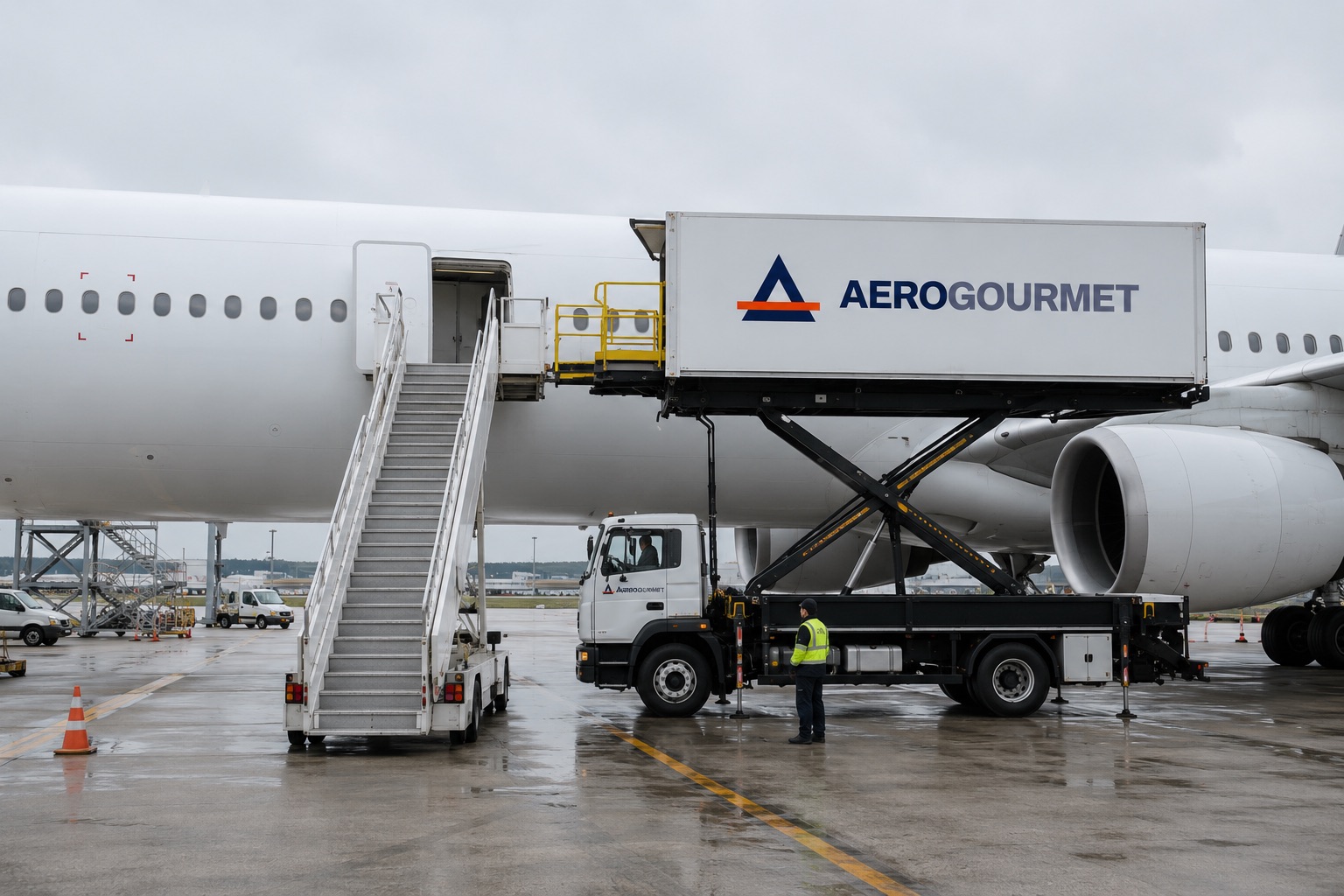
Commercial airline catering, here, is the uplift we produce at the station itself: a one-off rotation, a route flown three times a week, a leg added to a schedule already printed. The specification is the one you run at base; what changes is the postcode.
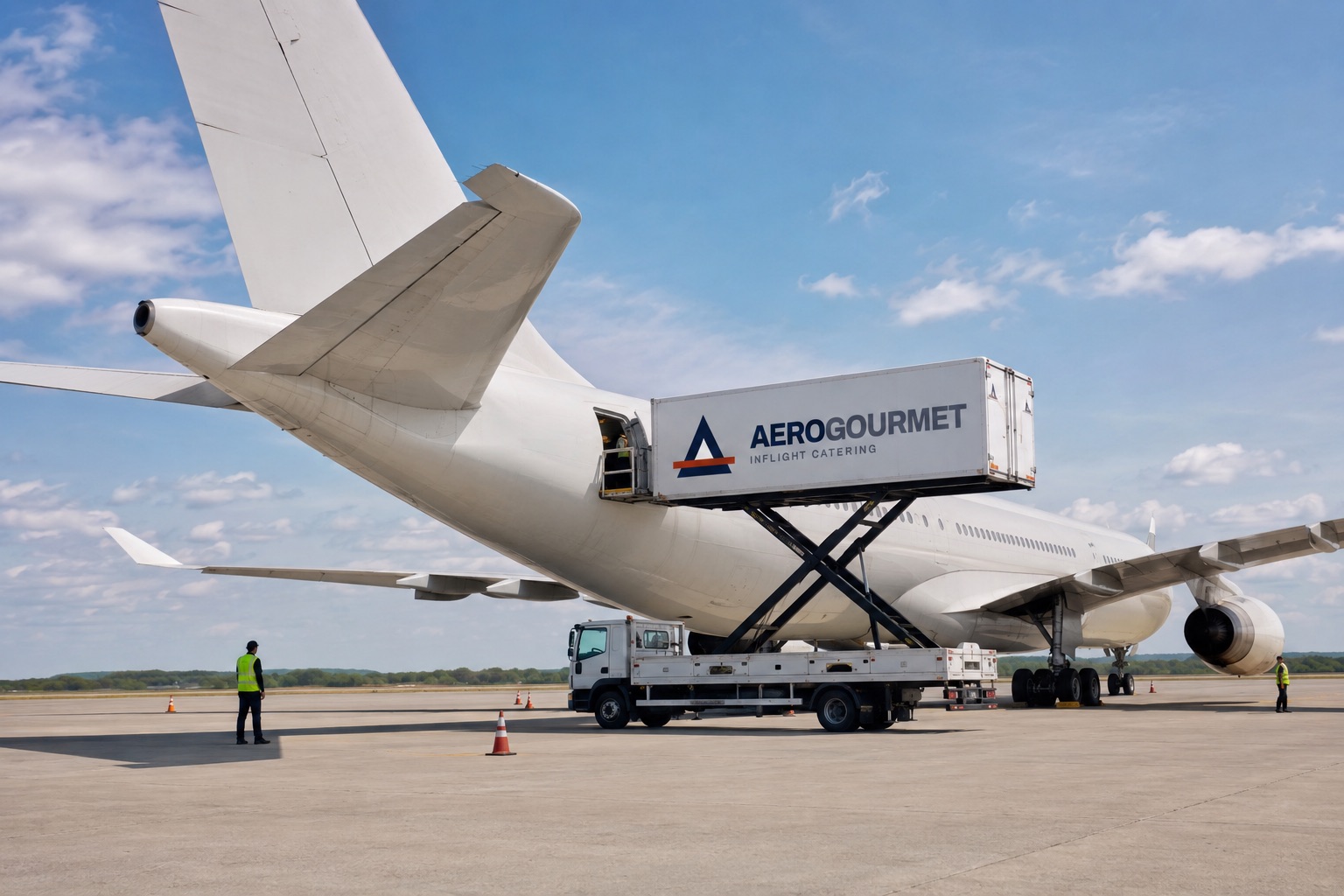
OCC controllers, station managers and duty officers place it, usually against a flight that fell outside the plan. Delivery runs airside through the station handler with badged vehicles, and a hi-loader lifts the uplift to the door — that is how a wide-body is provisioned to capacity rather than to whatever fits on a tail-lift.
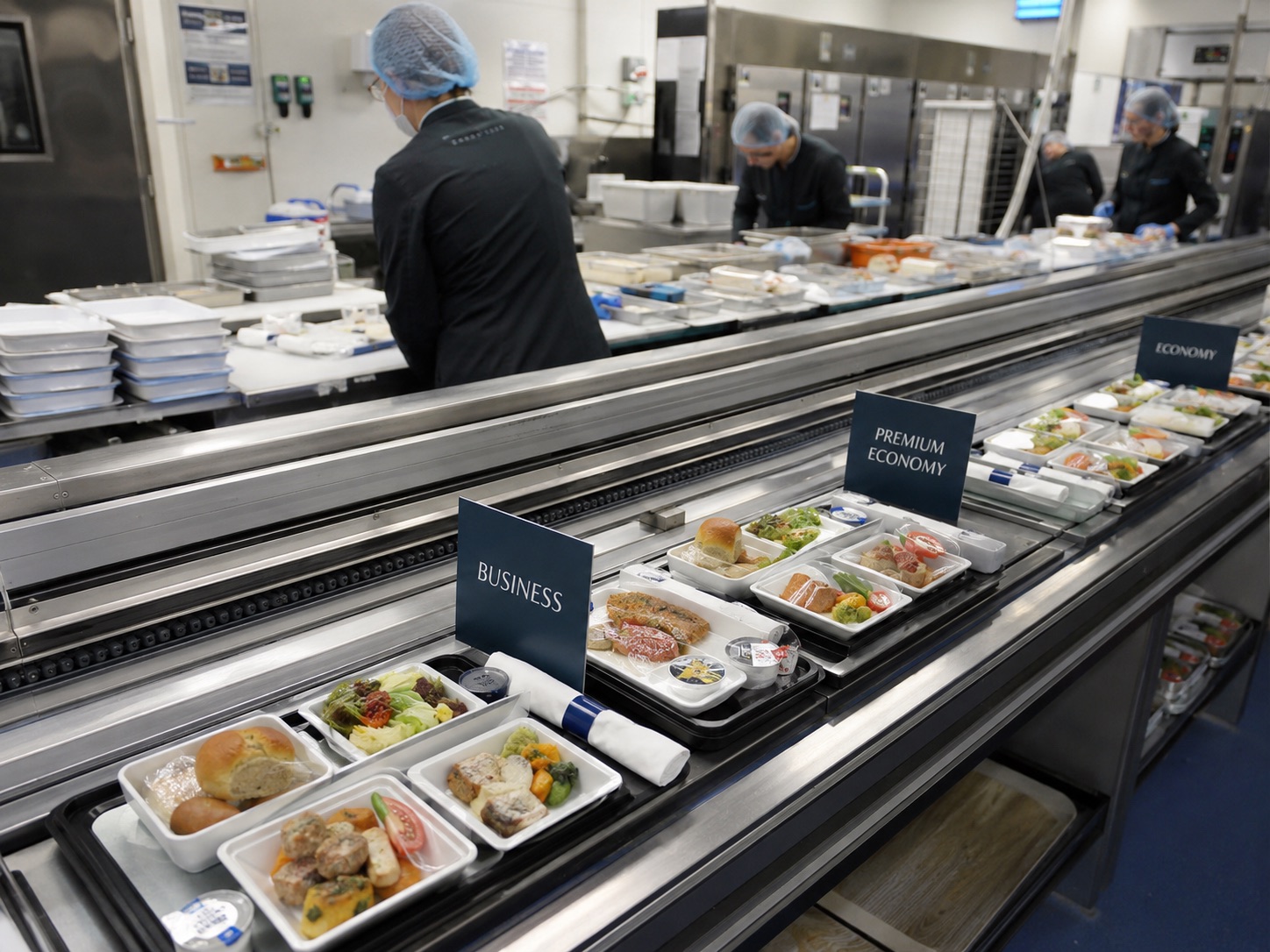
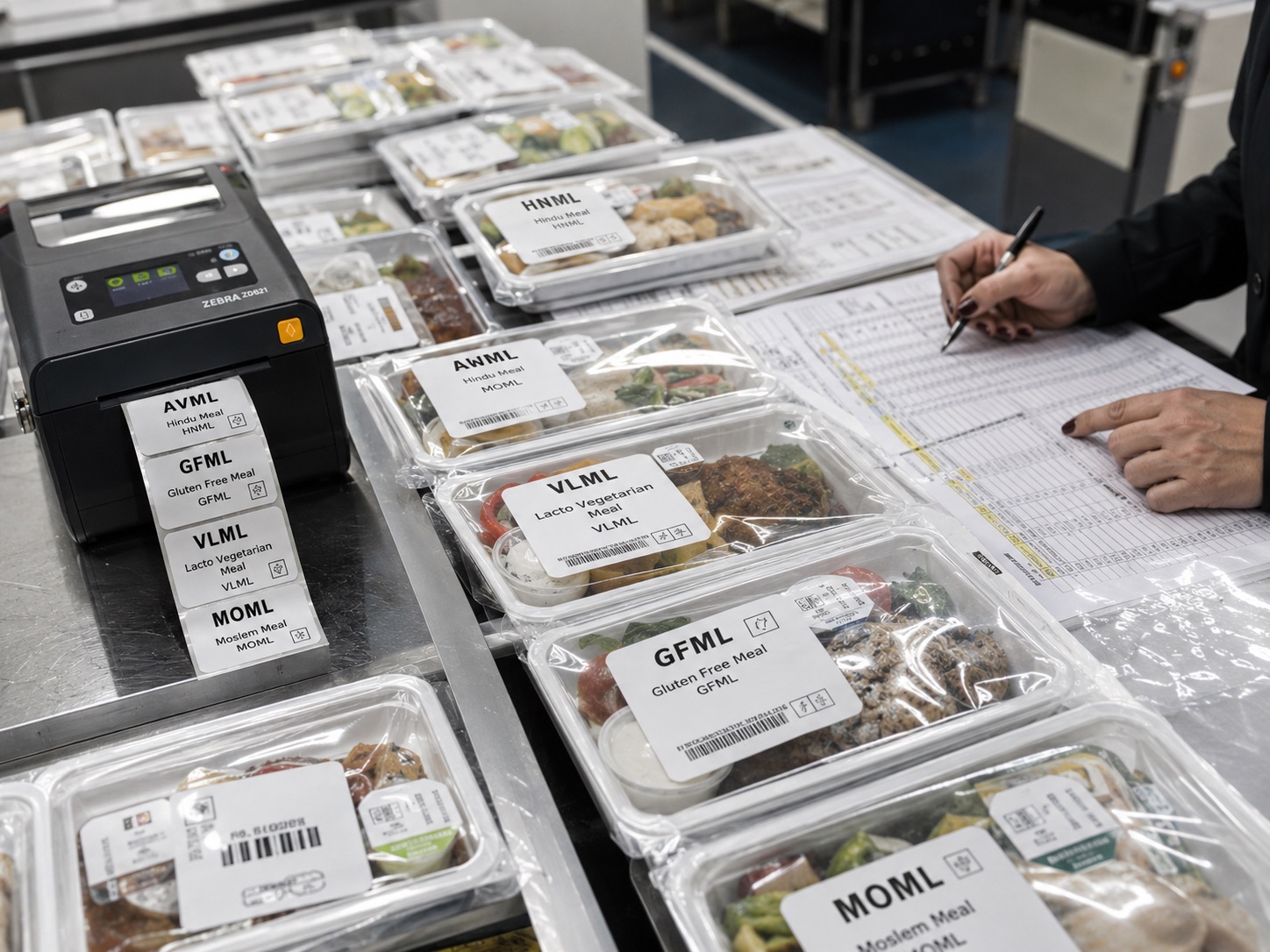
Our chefs write a distinct specification for each cabin and cost it per cover before a single tray is produced. The First menu and the main-cabin menu are different products of the same kitchen, the same food-safety regime and the same delivery window. The book behind this page reaches the galley-ready end of that range: tray sets and sealed meal boxes cabin by cabin, crew meals to your own specification, each with the cold chain it is logged against.
Off-base station
Produced on the field
Short notice
Quoted on the call
Diversion or AOG
Provisioned on the ground
before stand
Flight number taken
on order
Formats against galley
in production
Crew meals counted
at handover
Airside delivery arranged
on stand
Purser signs the sheet
any time
AOG uplift taken
A340, 767, 777 and 787 rotations provisioned across three cabins in one movement, boarded at galley height so the full main-cabin count goes on board rather than part of it.
Short-sector and regional aircraft on a tight turnaround, provisioned in sealed boxes and half-trolleys sized to the galley rather than to the order form.
An airframe stopped where nobody planned it, with passengers and crew still on the manifest. Provisioned in formats that hold their standard through an open-ended wait.
Order taken: flight number, ETA, passenger and crew count, dietary split.
Formats confirmed against the galley on board. Handler and stand access requested.
Production in an HACCP kitchen. Special meal codes counted separately.
Carts sealed, temperature logged, loading sheet issued.
Handler escorts the vehicle to the stand; hi-loader raised where the door needs it.
On the aircraft and stowed to the cabin plan; the purser signs the sheet.
| What this operation needs | Typical VIP caterer | Us |
|---|---|---|
| Catering at a station with no flight kitchen | Local hotel order | Galley-ready uplift |
| Same specification station to station | Whatever is local | One specification |
| Diversion at three hours’ notice | Best effort | 24/7 ops desk |
| One invoice for the network | One per station | One account |
Proof
The same menus, presentation and HACCP food-safety standard apply at every station on the network, rotation after rotation — including the stations served through the group network.
Yes, and that is the case this operation exists for. The order is placed through one ops desk, produced at or near the station, and delivered airside for the departing sector — to the same specification as a contracted rotation, not to a local approximation of it. You give us the flight number, the ETA and the counts; the desk confirms the format against the galley on board and comes back with a price for that uplift rather than a tariff to interpret.
The ops desk answers 24/7 and works to the time actually available rather than to a standard lead time. Format is the lever: sealed meal boxes go together fast and survive an open-ended wait, while full tray sets are used when the ground time allows for them. Crew are counted first because they are the constraint on the next sector. The window we quote is the window we hold, and you hear it before the aircraft is on stand.
Yes. Full First and Business service loads alongside main-cabin trays on one uplift, each cabin produced to its own specification and timed to the rotation rather than to the kitchen. Counts are reconciled per cabin against the loading sheet before the carts are sealed. Hi-loader boarding is what keeps this to one movement on a wide-body: the carts reach the door at galley height, so the turnaround is not spent carrying trolleys up a set of steps.
One written specification governs every station: the same menus, the same presentation, the same HACCP food-safety regime, rotation after rotation. Where a station is served through the group network, the local unit produces against that document and the result is checked with the same temperature and allergen paperwork we use in our own kitchens. The station changes and the paperwork does not, which is the only version of consistency an ops team can actually audit.
Yes, on the same uplift and to their own specification, including a different meal for each pilot where your operating procedures require it. Flight deck and cabin crew are counted separately on the loading sheet so a late passenger change cannot consume the crew allocation. On long rotations the crew cycle is varied deliberately, because crew eat the same product far more often than any passenger on the aircraft does.
Airline catering — ad hoc, outstation, diversion
The ops desk answers 24/7 and prices the uplift on the call, without a brochure in sight.