HACCP cold chain
Temperature logged end to end.

Royal & VVIP flights
VVIP cabin service and household dietary protocols, met to the letter and delivered with the discretion your principal expects — on a private airliner or a VVIP-configured wide-body.
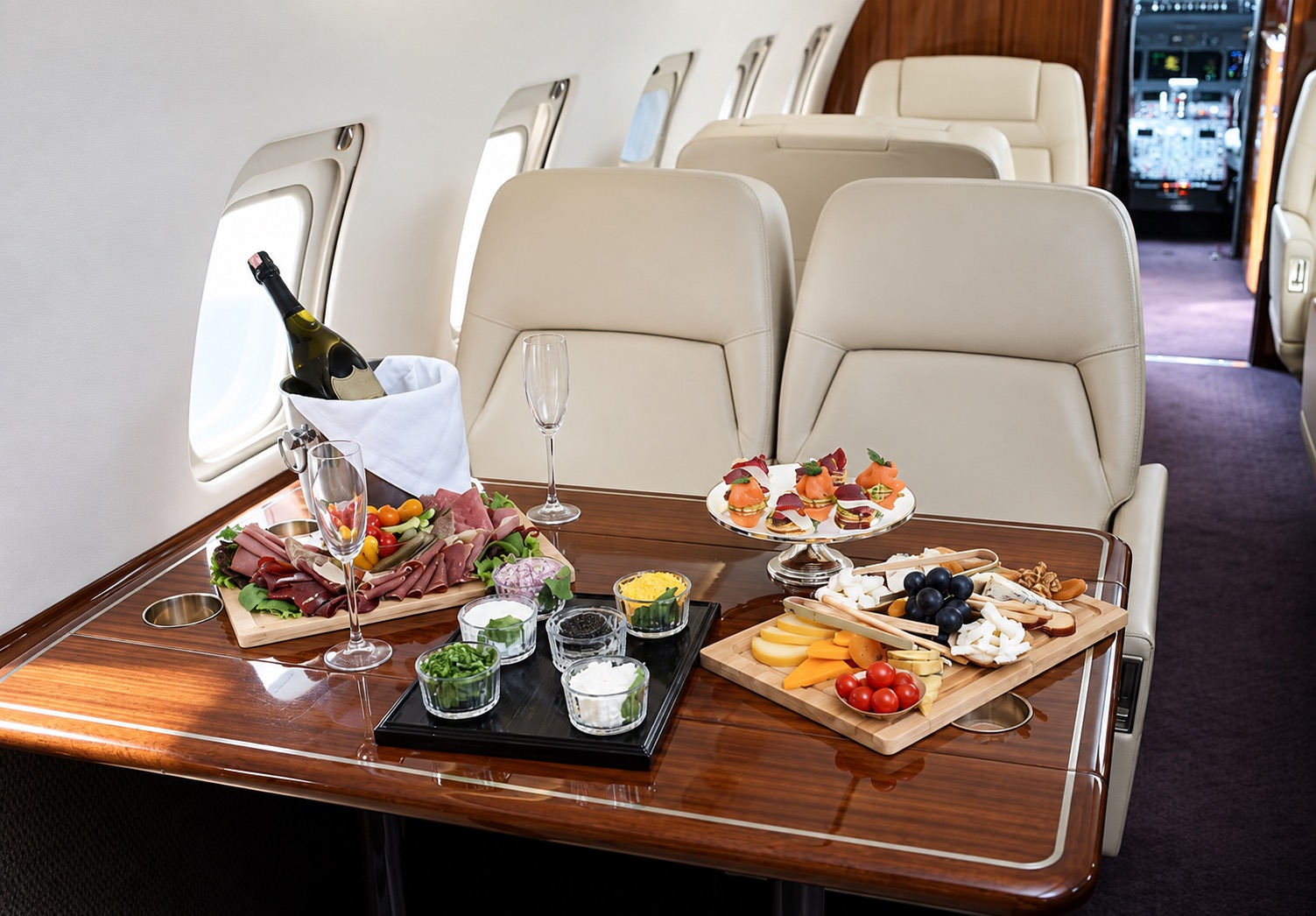
Royal flight catering is the provisioning of a household’s aircraft against a written standard that does not restart with each departure: preferences, service order, prohibitions, the hour each course is expected. Every later movement is measured against that file instead of briefed from nothing.
The instruction comes from household staff, private flight departments and the cabin managers who answer to them. We hold badged ramp access, so the uplift goes airside and a hi-loader raises it to the door — a VIP-configured wide-body sits far above a tail-lift van, and that is the airframe this work puts on the stand.
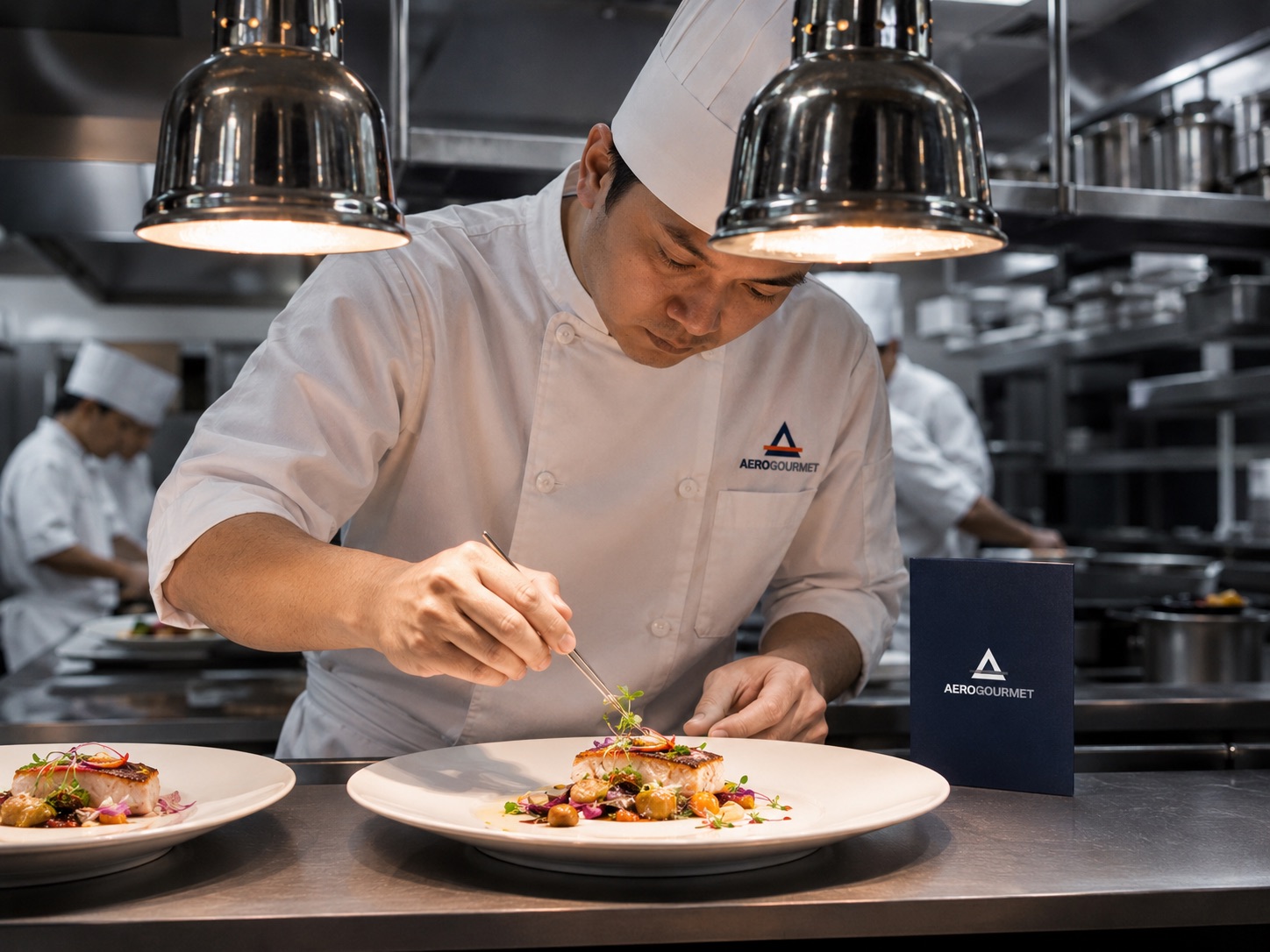
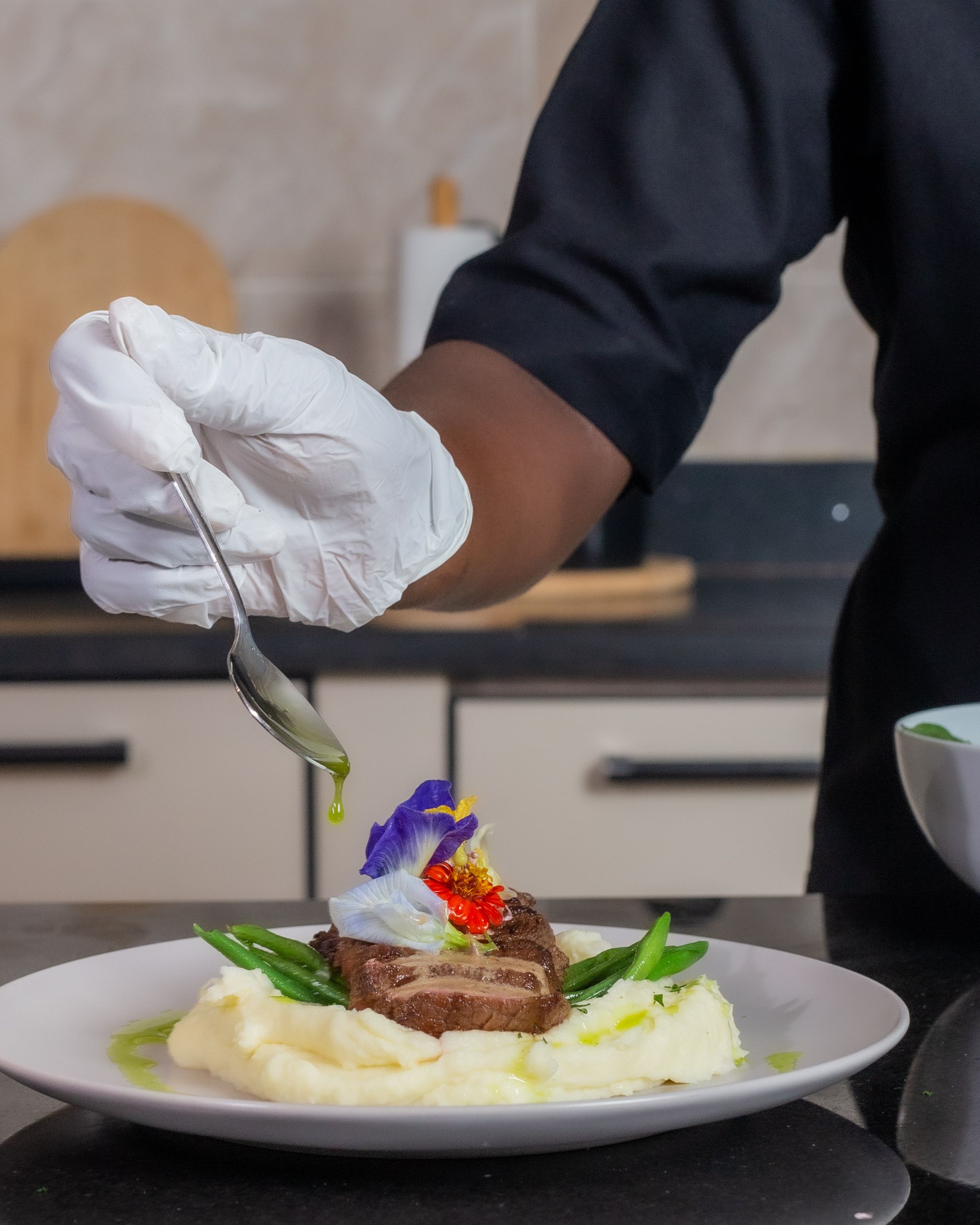
A principal’s preferences are not a menu request, they are a standing specification. Our chefs hold that specification in writing, cook to it on every leg, and adapt it to what the station can source without ever changing what reaches the cabin. The book behind this page writes the household side of that out in full: First-cabin plating held between legs, household dietary protocols, halal and kosher documented per passenger.
Standing specification
Held between flights
First-cabin execution
At wide-body scale
Absolute discretion
Nothing discussed outside
before stand
Standing file recalled
on order
Service order agreed
in production
First-cabin plating
at handover
Certificates attached
on stand
Countersigned by cabin manager
any time
Substitutions written back
Converted narrow-body airliners in VVIP configuration. Principal cabin, working office and staff areas are plated to the same file and loaded through one door at galley height.
A340, 767, 777 and 787 airframes configured for a household. First-cabin execution forward, the full staff and protection complement behind it, provisioned on a single uplift.
A scheduled or chartered narrow-body cabin taken over for a leg, worked to the household file rather than to whatever the operator’s standing menu happens to be.
Itinerary and cabin configuration confirmed; standing specification recalled from file.
Service order agreed with the household. Local sourcing confirmed per leg.
Production in an HACCP kitchen. First-cabin plating prepared to specification.
Carts sealed and temperature logged. Allergen sets briefed to the cabin team.
Vehicles airside under badge, loader raised to the door, VIP terminal coordination closed.
Handed over at the door, stowed cabin by cabin, countersigned by the cabin manager.
| What this operation needs | Typical VIP caterer | Us |
|---|---|---|
| Principal cabin to First standard | Yes | Yes |
| Staff and security on the same uplift | Separate order | One uplift |
| Specification held between flights | Re-briefed | Held on file |
| Same standard at the next station | Subcontractor | One contact |
Proof
Our experience is described by type of mission, never by the household that flew it. Nothing identifiable — a name, a nation, a date — is recorded, referenced or shared.
Yes. Protocols and preferences are recorded once, held on file and applied at every stand without re-briefing. Where a station sources an ingredient differently, the substitution is agreed with your office in advance rather than improvised in the galley — and it is written back into the file so the next movement inherits it. A single point of contact is accountable for that continuity across the whole itinerary.
Yes, and on the same uplift. The principal cabin is produced to First standard while the staff, the office and the protection complement are provisioned to their own specification, counted on one loading sheet and boarded through one door. Neither is compromised for the other. Hi-loader boarding is what makes that possible on a converted wide-body: the carts reach galley height, so cabin count stops being the limiting factor.
We do, in writing, at the handover. The service order travels with the uplift as a sheet the cabin manager can hold: course sequence, the hour each is expected, plating notes for the dishes that need them, and the allergen set for the party behind the principal cabin. Where the household keeps its own crew, that sheet is the same one your office signed off — nothing is retold from memory on the stand.
Yes, and they are the airframes this operation is built around. BBJ catering and ACJ catering are worked exactly as a wide-body is: badged ramp access, a hi-loader raised to the door, carts sealed and temperature-logged from the pass. On a VIP wide-body the same uplift carries the principal cabin and the party behind it. Cabin configuration changes the loading sheet; it never changes the standard of the aircraft catering applied to the plate.
We describe our experience by mission type and never by client. No household, nation or date appears in our copy, our case material or our commercial documents, and nothing identifiable is kept in the specification file itself — it records a standard, not a person. Staff working a movement are told what they need to plate and load it, and no more. Nothing about the flight is referenced afterwards, internally or externally.
Royal & VVIP flights
You get a written quote from a coordinator who already holds the file. No brochure follows it.