01
Halal & kosher
Produced to certification, sourced and kept separate down the whole line.

Menus
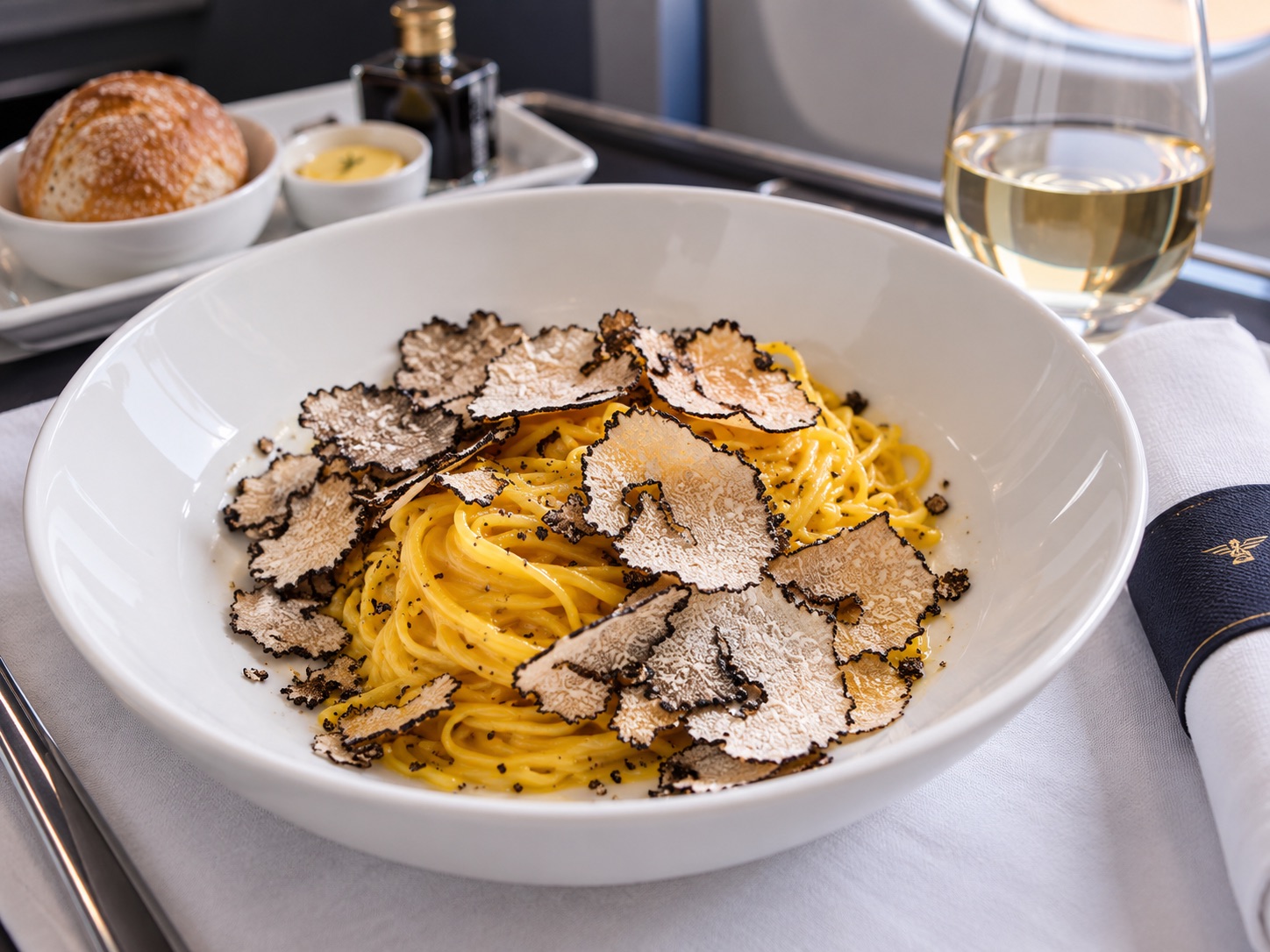
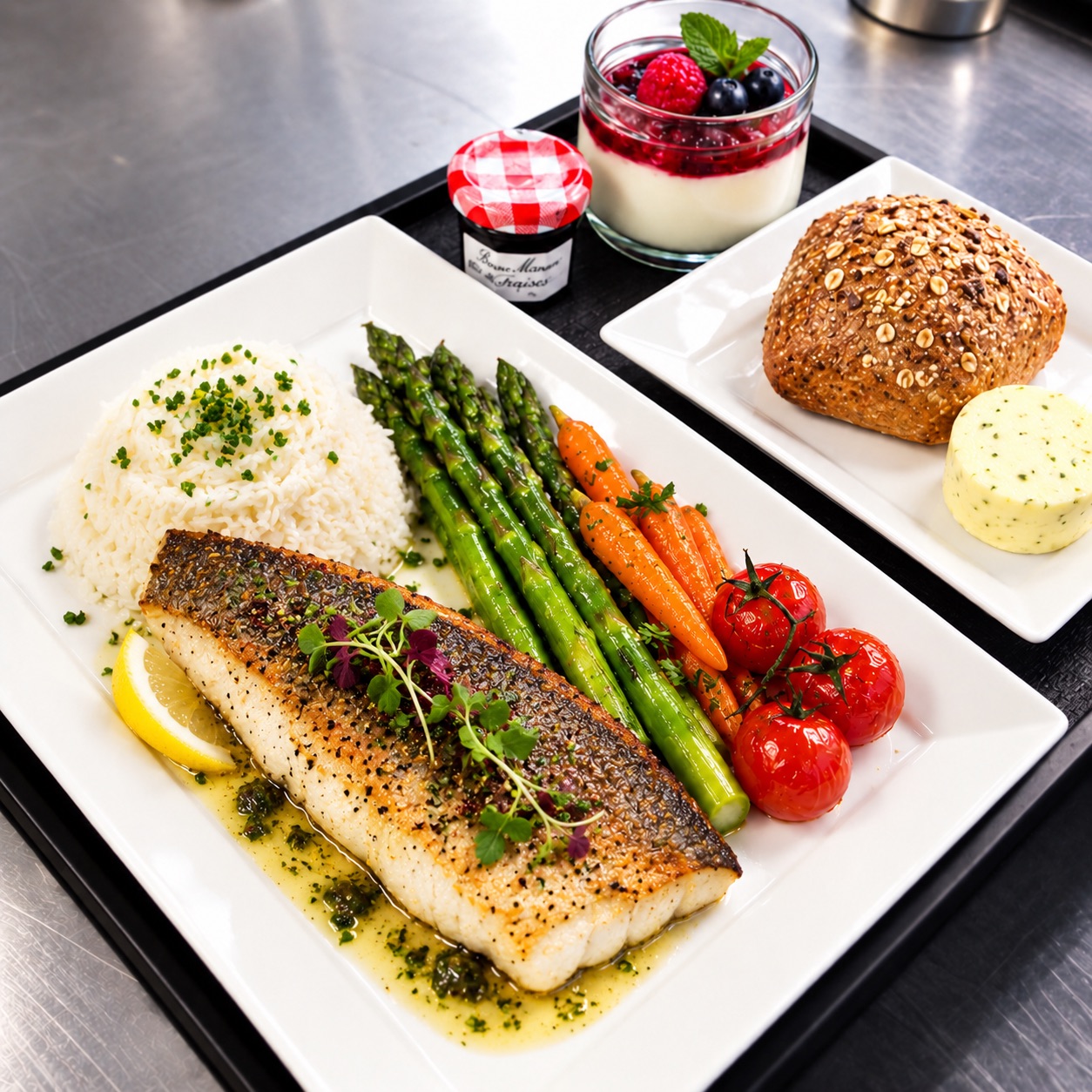
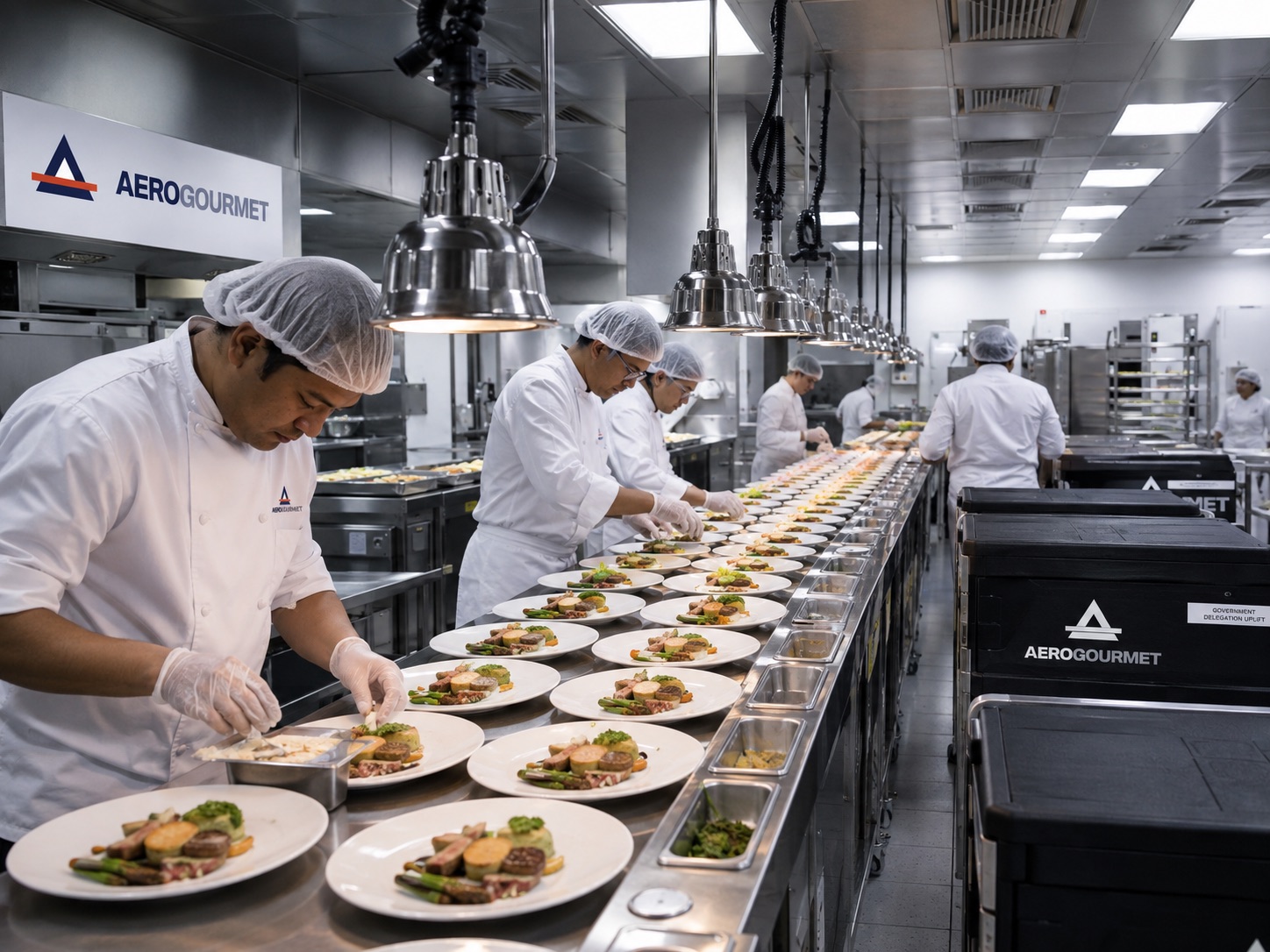
Three menu books, written to the cabin and to the operation: royal and government flights, charter and commercial, private jet. From 8 passengers in First to 400 across three cabins — one kitchen, one cold chain, one standard.
01
Royal & Government Flights
Royal households · government · state operations
One book for royal households and for state flight operations, because both are provisioned to the same standard: plated service written to the cabin, to protocol and to a specification held in writing between legs. A household manager and a protocol officer work from the same pages — cabin splits, prescribed and medical diets, halal and kosher documented per passenger.
02
Charter & Commercial
Charter · ACMI · group · scheduled · ad hoc
Volume provisioning for charter and ACMI wide-body work and for airline rotations, scheduled or ad hoc: 400 passengers across three cabins on a single uplift, with a configured VIP cabin worked to the same standard. Tray sets, sealed meal boxes and crew meals to your own specification, boarded by hi-loader.
03
Private Jet
Business jet · VVIP charter · flight departments
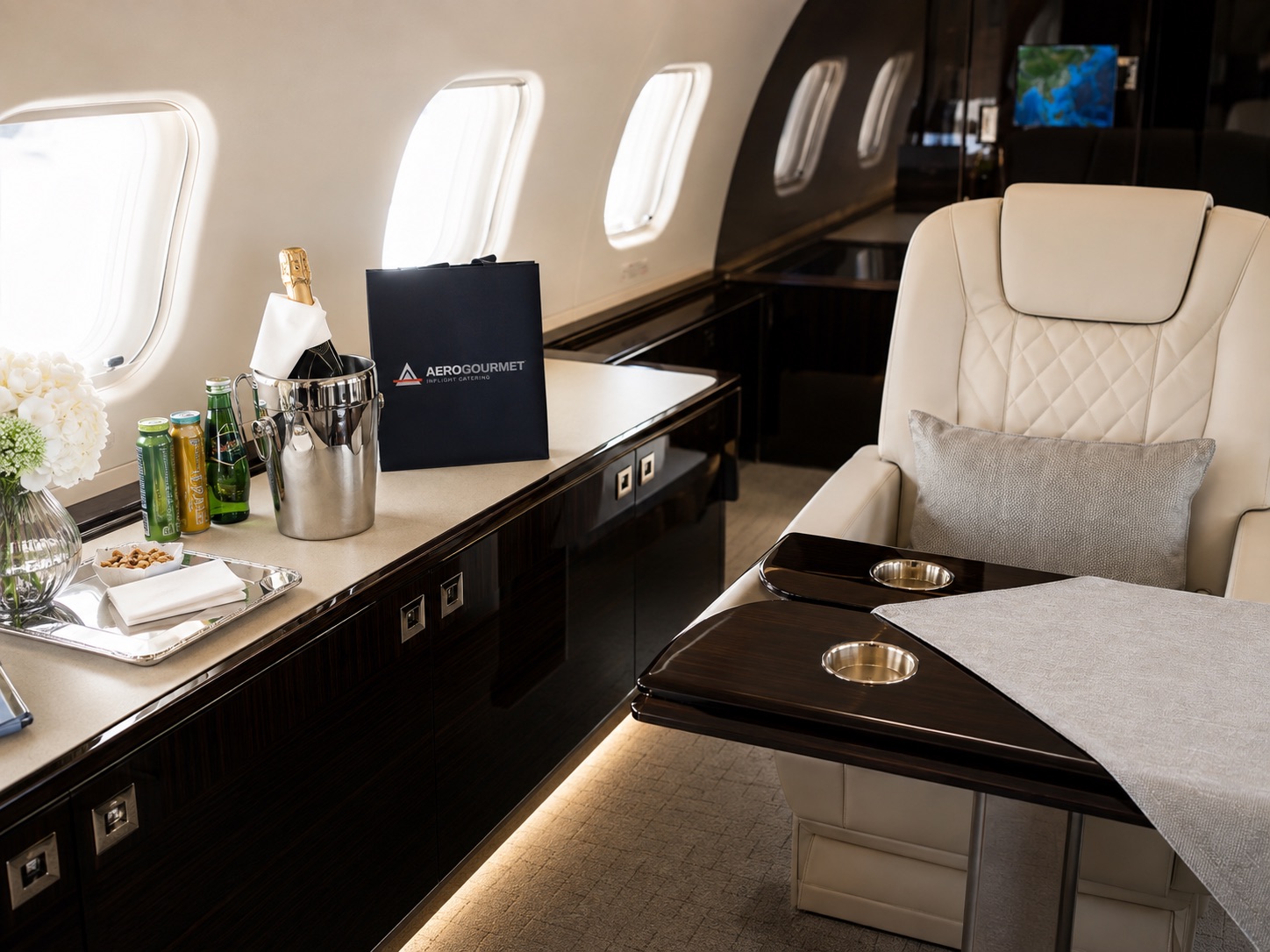
Plated service written for a business aviation galley — an oven, a chiller and very little space. Each dish carries its portioning, its packaging and the reheat sequence a single crew member runs at altitude. From 8 covers, produced on the same line and under the same cold chain as a 400-passenger uplift.
Special & dietary meals
Special meals are produced on the same line as the rest of the uplift, to the same cold chain, and signed off on the same loading sheet. Requested per passenger, labelled per tray.
The formats we produce for that operation, cabin by cabin, and the standard each one is built to: plated sets forward, tray sets and sealed meal boxes behind. Each format carries its handling notes, its cold-chain window and the diet codes it can be produced under. They are documents an ops team works from — formats, counts and paperwork — rather than a photographic carte.
Book 01 for royal households, government delegations and state flight operations, which are provisioned to one standard and therefore share one book. Book 02 for charter, ACMI and wet-lease wide-body work and for airline rotations, scheduled or ad hoc, including a configured VIP cabin inside a volume uplift. Book 03 for business aviation. The split follows where the counts, the formats and the paperwork differ. Send the ops desk the aircraft and the operation and it comes back with the book and the pages that apply.
Yes, and a three-cabin wide-body usually does. First, Business and main cabin go on the same loading sheet, each to its own specification — plated service forward, tray sets or sealed meal boxes behind, boarded together by hi-loader. The books are split by operation, not by cabin, so a flight is never asked to pick one of them.
Yes. An airline or a flight department that arrives with its own specification is produced to that document, and the book becomes the reference for whatever the specification leaves open — handling, labelling, the format of a set. Where nothing is written yet, the ops desk drafts the specification from the book and the flight, sends it back for sign-off, and that is the document the galley is loaded against.
They run across all three rather than forming a fourth. Halal and kosher to certification, medical diets and declared allergens, crew and flight deck as their own sets: all of it is requested per passenger, on the same request as the rest of the uplift, with the diet code and the cabin. Changes reach the kitchen through the ops desk up to the point the uplift is sealed.
Per uplift: against the aircraft, the cabins, the passenger counts and the station. The books carry the formats and the standard rather than a tariff, because the same dish is costed differently at 12 covers and at 400, and differently again at a station provisioned from the nearest hub kitchen. Give the ops desk the flight and the counts and you get a figure for that uplift.
Aero Gourmet
An operations coordinator comes back with the specification and a price for that uplift.